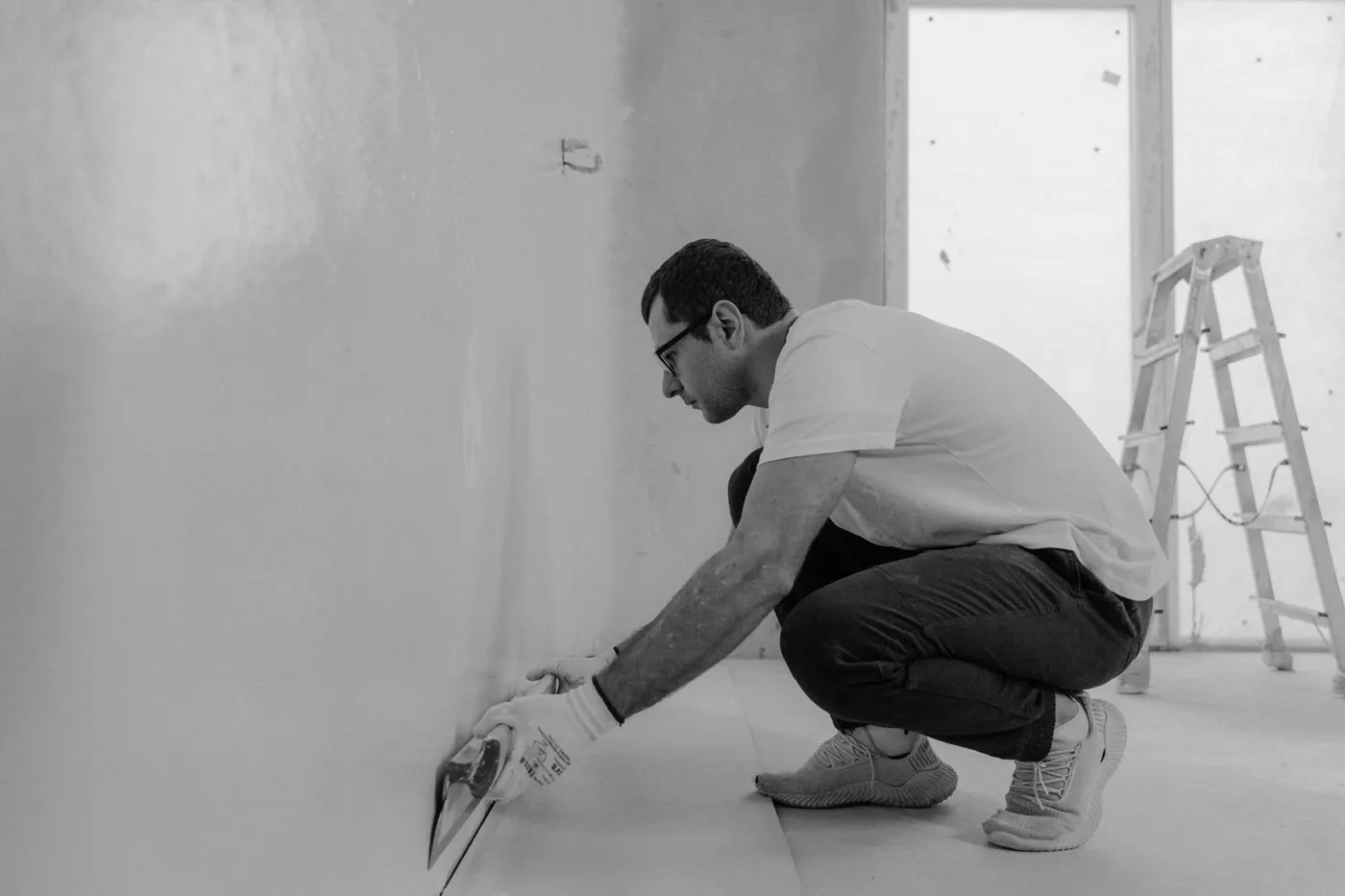
What counts as a drywall repair
A repair fixes damage in a wall or ceiling without replacing the whole surface. In Temple homes the common ones are:
- Doorknob holes and furniture dents
- Holes left after a TV mount, shelf or old wiring comes out
- Cracks at seams and above doors
- Nail and screw pops in newer houses
- Small areas softened by a leak that has already been fixed
- Corner bead that's dented or rusted
How the repair is done
- The damage is cut back to clean, solid board. Loose paper and crumbled gypsum come out.
- Small holes get a backer or a mesh patch. Anything larger than about a fist gets a new piece of drywall screwed to the studs or to wood backing.
- Joints are taped with paper or mesh bedded in compound. Setting compound is used for the first coat because it shrinks less and holds better.
- Two or three thin coats are feathered out wider than the patch, so the repair doesn't show as a hump.
- The texture is matched to the wall around it.
- The patch is primed, so the paint soaks in evenly and doesn't flash.
Why patches show up later
The most common complaint about drywall repair is a patch you can still see. It usually comes from one of these:
- **No primer.** Fresh compound drinks paint differently from the old wall and looks dull or shiny.
- **Texture mismatch.** Knockdown that is too heavy, too flat or knocked down too early stands out in side light.
- **A narrow patch.** Compound that wasn't feathered wide enough leaves a visible ridge.
- **Movement.** In Temple, a crack that was only skimmed can reopen when the clay under the house shifts with the seasons.
Repair or replace?
Repair makes sense when the board is firm and the damage is local. Replacement makes sense when the board is soft, moldy or crumbling, or when the damage covers most of a wall. If water caused it, the source has to be fixed first. Our page on [water-damaged drywall](/water-damage-drywall-temple-tx/) covers that case.
What affects the price
- Size and number of patches. Several small patches in one visit cost less per patch.
- Height. Stairwells and vaulted ceilings need ladders or scaffolding.
- Texture. Smooth walls are quicker. Knockdown and skip trowel take more time to blend.
- Paint. Some jobs include primer only. Others include repainting the whole wall so the color matches.
- Trips. Each coat needs drying time, so most repairs take two or three visits.
General ranges are on the [Temple drywall cost page](/drywall-cost-temple-tx/).
Temple notes
Temple's newer subdivisions and older central neighborhoods need different repairs. A house built in the last few years is more likely to have nail pops and seam lines from framing lumber drying. An older house is more likely to have layers of past patches and cracks tied to soil movement. Mention the age of the house in your notes. It helps set the right plan.
Types of damage and the usual fix
Doorknob and impact holes
A doorknob hole is usually 2 to 3 inches across. It can take a mesh patch or a small "California patch," where a piece of drywall with its paper face left wider than the hole is set in and feathered. A door stop afterward keeps it from happening again.
Anchor and mount holes
TV mounts, curtain rods and shelves leave clusters of small holes. Each one is filled with setting compound, sanded flat and textured. If a heavy mount tore out, the torn paper is cut back and sealed first, or the patch will bubble.
Soft or crumbly board
Board that gives under a thumb has lost its gypsum core, usually from water. Patching over it doesn't hold. The section is cut out to solid edges and replaced.
Dented corners
Outside corners take hits from vacuums, carts and furniture. Bent metal bead is cut out and replaced. Paper-faced bead stands up better to the next bump.
A typical repair, day by day
- **Day 1:** Protect the floor, cut out damage, install backing and new board, tape and set the first coat.
- **Day 2:** Second coat, feathered wider. Light sanding.
- **Day 3:** Final skim, sanding, texture match and primer.
Small jobs with fast-setting compound can sometimes finish in one long visit. Bigger repairs and humid weeks take longer.
DIY or hire it out?
A single small hole on a smooth wall is a reasonable weekend project. Spackle, a putty knife and fine sandpaper will do it. Hiring out makes more sense when:
- The wall has knockdown or orange peel, since matching texture is the hard part
- The damage is on a ceiling or a tall wall
- There are many patches in one room
- The board is soft or there was a leak
- You want it ready to paint without a visible patch
Repairs in rentals and before a sale
Temple has a large rental market. The Census Bureau puts the owner-occupied rate at about 52%, so close to half of homes are rented. Landlords and tenants often need several rooms patched between leases. Sellers often patch before listing so inspectors and buyers don't fixate on cosmetic damage. In both cases, grouping every patch into one visit saves time.
How to prep for a repair visit
- Clear about 4 feet in front of the damaged wall.
- Take pictures off nearby walls.
- Find leftover paint if you have it. The can lid often lists the color.
- Keep pets out of the work area.
- Plan for some dust, even with plastic up.
Repairs that last in Temple
Seasonal soil movement is the main reason repairs fail here. Two habits help. First, re-tape joints instead of skimming over cracks. Second, use setting compound for the first coat, since it shrinks less and bonds harder than premixed mud. Both cost a little more time and save a second visit.
Questions people in Temple ask
How long does a small drywall repair take?
Most small patches take two or three short visits over a few days, because each coat of compound has to dry. Fast-setting compound can bring that down.
Can you repair drywall without repainting the whole wall?
Sometimes. If you have leftover paint and the wall isn't faded, touching up the primed patch can work. Often the whole wall needs a coat so the color matches.
Will the patch show on a knockdown wall?
It shouldn't if the texture is matched properly and the patch is primed. Knockdown is common in Temple and matching it is routine.
Is it worth fixing a single nail pop?
One pop is easy to fix. Several in a newer house usually means the framing is still drying, so it can make sense to wait a season and fix them all at once.
Can you fix drywall damage left by a tenant?
Yes. Move-out damage like anchor holes, doorknob holes and dented corners is one of the most common repair jobs.
What is a California patch?
A drywall patch cut with extra paper on its face. The paper overlaps the hole edges and is feathered in, so no tape is needed on small holes.