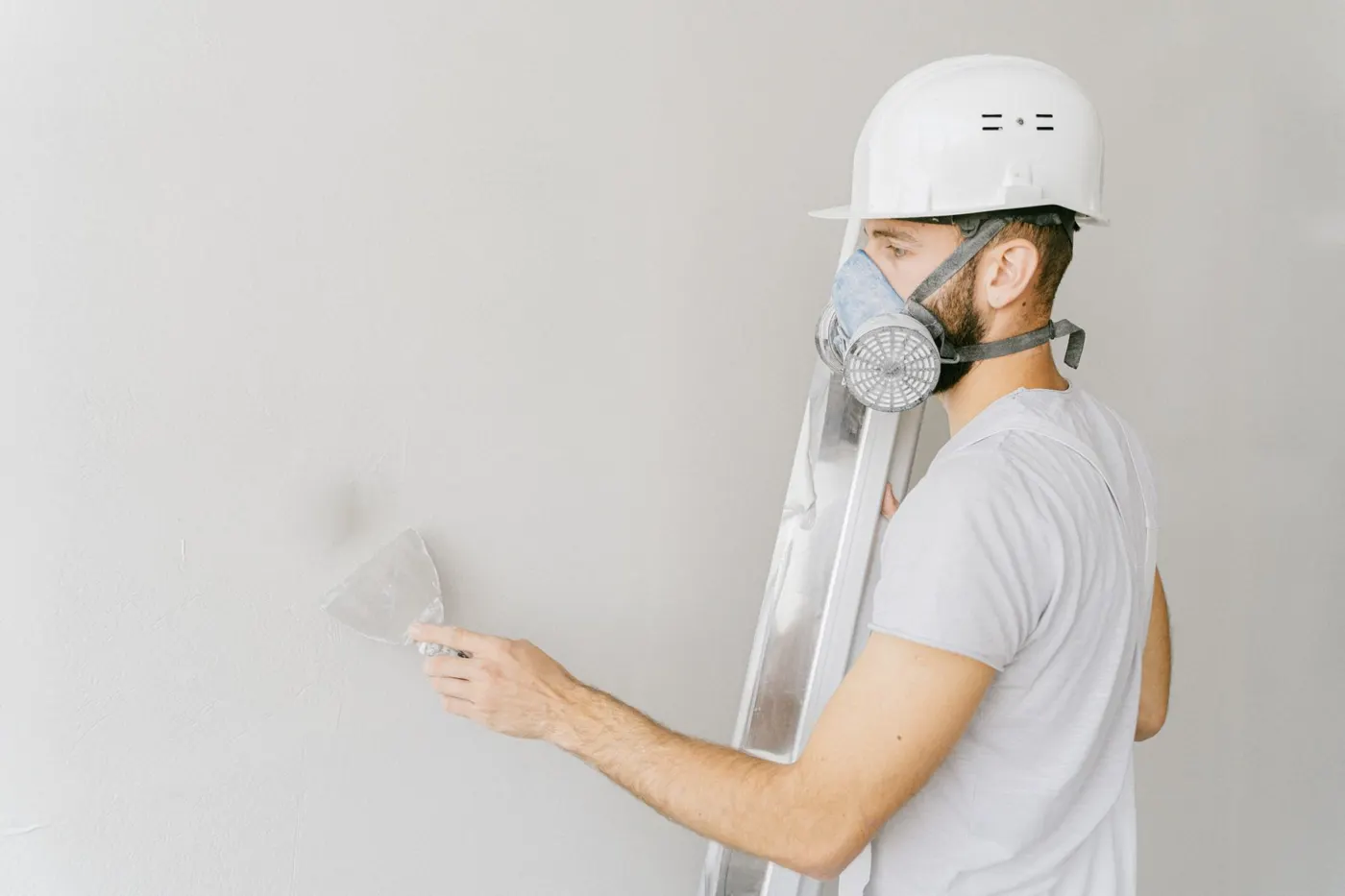
What finishing is
Finishing is everything that happens after the board is hung. It's the taping, the coats of mud, the sanding and the prep for paint. It decides whether a wall looks flat and clean or shows every seam.
The five finish levels
Industry groups such as the Gypsum Association grade drywall finishing from Level 0 to Level 5.
- **Level 0:** board hung, nothing else.
- **Level 1:** tape set in compound. Used above ceilings and in hidden areas.
- **Level 2:** tape plus one coat. Common in garages and behind tile.
- **Level 3:** two coats. Fine under heavy texture.
- **Level 4:** three coats and sanded. The usual finish for painted walls in homes.
- **Level 5:** Level 4 plus a thin skim coat over the whole surface. Used for gloss paint, strong side light or very large smooth walls.
Picking the right level
Think about light and paint. A wall facing a big west window in Temple gets hard afternoon sun that rakes across the surface and shows every ridge. That wall may need Level 5. A textured bedroom wall painted flat is fine at Level 3 or 4.
Corners and beads
- **Inside corners** get paper tape folded into the corner, or a paper-faced metal tape.
- **Outside corners** get metal or vinyl bead. Paper-faced bead resists cracking and dents better than bare metal.
- **Bullnose corners** are rounded and need matching bead and caps.
Common finishing problems
- Seams that show as raised lines (called ridging)
- Tape that bubbles or lifts because there wasn't enough mud under it
- Screw heads that show through paint
- Sanding scratches visible in side light
- Cracks at inside corners where walls meet the ceiling
Each has a fix, and most don't need new board. See [peeling drywall tape](/problems/peeling-drywall-tape/) for the most common one.
Humidity and drying
Joint compound dries slower in humid weather. Temple summers can stretch drying time, and running the AC with the room closed off helps. Setting compound hardens by chemical reaction, so it's less affected by humidity and is often used for first coats.
What affects the price
- Square footage and the number of seams and corners
- Finish level, especially a full Level 5 skim
- Texture after finishing
- Repairing a poor earlier finish compared to finishing new board
Tools and materials that make a difference
- **Paper tape** is the strongest choice for flat seams and inside corners.
- **Mesh tape** goes on fast, but it needs setting compound underneath or it can crack.
- **Setting compound** hardens by chemical reaction and comes in working times like 20, 45 or 90 minutes. It's harder and shrinks less.
- **Premixed all-purpose mud** is easier to sand and good for later coats.
- **Lightweight topping** sands easily for the final coat.
- **Wide knives and trowels** (10 to 14 inches) feather coats out so seams disappear.
How each coat builds the finish
- **Bed coat.** Tape pressed into a full layer of compound. No dry spots under the tape.
- **Fill coat.** Fills the taper and covers the tape, a few inches wider than the first coat.
- **Finish coat.** Wider still, thin and smooth.
- **Skim (Level 5 only).** A thin coat over the whole surface to even out texture between paper and compound.
Each coat has to dry before the next. Rushing it is the main cause of shrinkage cracks and bubbles.
Sanding and dust
Sanding between coats knocks down ridges. Pole sanders, sanding sponges and vacuum-connected sanders all help. Over-sanding scuffs the paper face, which shows through paint as fuzzy patches. A light touch and a good work light matter more than heavy sanding.
Inspecting a finish before paint
- Hold a bright light flat against the wall so it rakes across the surface.
- Look for ridges, dips, tool marks, crowned seams and screw heads.
- Mark problems with a pencil and touch them up before primer.
Problems are far easier to fix before paint than after.
Primer is part of finishing
A drywall primer seals paper and compound so they take paint the same way. Skipping primer leads to "flashing," where seams show through as dull or shiny bands. A high-build primer can also fill minor sanding scratches.
Finishing in Central Texas weather
Temple's NOAA normals show about 36 inches of rain a year and hot summers. In humid stretches, premixed compound may need a full day or more between coats. In very dry, hot conditions, the surface can skin over before the inside dries, which can cause cracking. Steady AC and good airflow keep drying predictable.
Fixing a bad finish
Common repairs on existing finishes:
- Skim-coating over ridged seams
- Re-taping bubbled or lifted tape
- Re-floating crowned butt joints with a wider, flatter coat
- Spot-priming and touching up flashing seams
What to tell us about your finish
Let us know the rooms, whether walls will be smooth or textured, the paint sheen you plan to use, and whether board is already hung.
Questions people in Temple ask
What finish level do I need for flat paint?
Level 4 is the usual choice for flat or eggshell paint on walls in a home.
When is Level 5 worth it?
When the wall gets strong side light, when you're using a semi-gloss or gloss paint, or when a large smooth wall needs to look perfectly flat.
Why are my seams showing through the paint?
Usually a thin mud bed, poor feathering or skipped primer. A skim coat over the seams and fresh primer fixes most cases.
Can finishing be done in summer?
Yes. It may take a little longer for coats to dry, and keeping the room cool and dry with the AC helps.
How many coats of mud does drywall need?
Usually three over taped seams for a standard Level 4 finish, plus a full skim for Level 5.
Is mesh tape as good as paper tape?
Mesh works well on flat seams with setting compound. Paper is stronger at corners and on joints that might move.